Why the Best Memories Are Made at a Pizza Restaurant
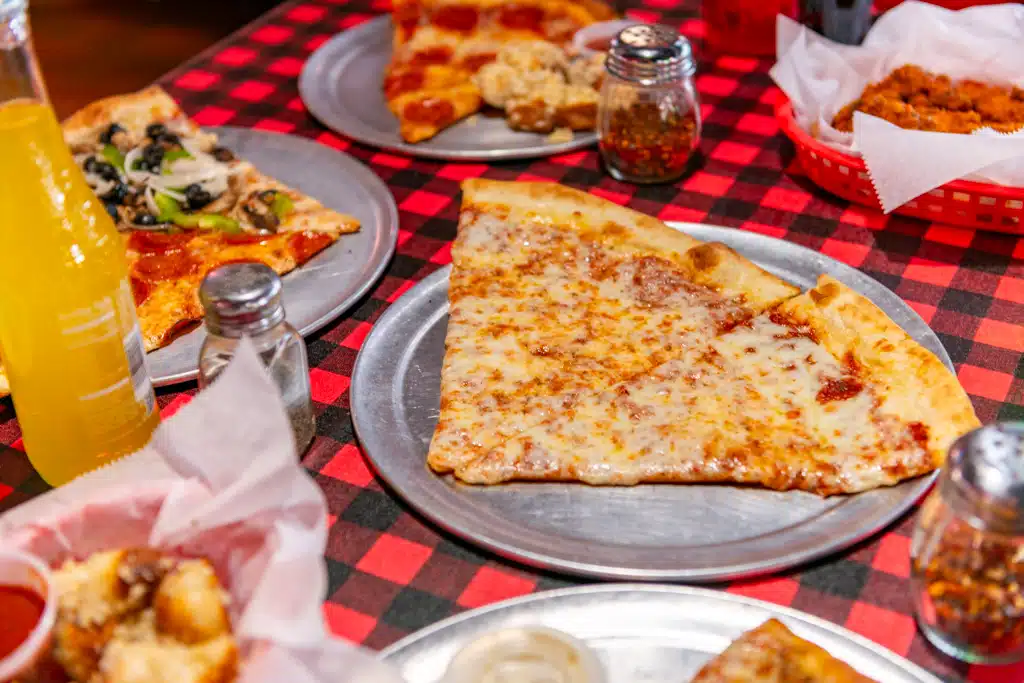


There are fancier places to eat than a pizza restaurant. There are quieter rooms, sharper table settings, longer wine lists, and menus that require explanation. Yet when people talk about the meals they still remember twenty years later, they often come back to the same kind of scene: a crowded table, a warm pie landing in the middle, someone reaching for the last slice, a child laughing too loudly, a grandparent telling a story that has been told before but somehow feels better with a basket of crusts on the table.
That pattern is not accidental. A pizza restaurant has a rare mix of accessibility, ritual, and generosity built into the experience. It is one of the few dining environments where almost everyone can relax at the same speed. Nobody has to master the menu. Nobody worries too much about doing the wrong thing. Even the simple act of sharing slices changes the tone of a meal. It nudges people away from individual orders and toward a common center.
After years of eating in every kind of restaurant, from neighborhood storefronts with fogged-up windows to polished dining rooms with imported ovens and reservation books packed weeks ahead, I have come to appreciate how often pizza becomes the setting for the moments people keep. Birthdays that were supposed to be low-key. Team dinners after a season-ending game. First dates that turned into marriages. Friday nights when the point was not food as performance, but food as a reason to stay at the table a little longer.
A meal that invites people in
The first advantage of a pizza restaurant is that it removes friction. That sounds like business language, but it matters in human terms. Good memories usually need room to happen. If a dinner begins with stress over price, dress code, etiquette, or what to order, people spend the first half of the evening managing themselves. At a pizza restaurant, that burden tends to fall away.
Most people already know what they are walking into. Even if the place specializes in wood-fired Neapolitan pies, deep-dish pans, Roman squares, or a local house style, the framework is familiar. There will be dough, sauce or olive oil, cheese or no cheese, toppings, slices to share, something cold to drink, and often a dessert that appears because nobody is ready to leave. Familiarity creates ease, and ease makes conversation better.
That matters especially for mixed groups. If you have ever organized dinner for eight people spanning three generations, you know how quickly a restaurant choice can become a problem. One person wants vegetarian options. Another wants something substantial. One child will eat plain cheese and nothing else. Someone else needs a place that does not feel stuffy. A pizza restaurant solves a surprising number of those tensions in one move. It is one of the few formats that can satisfy a broad table without making the meal feel compromised.
The best operators understand this instinctively. They do not only sell pizzas. They sell the conditions that allow a group to settle in. The room is usually energetic rather than hushed. The pace is brisk enough that people are not left waiting too long, but flexible enough that the meal can stretch if the table wants it to. You can arrive dressed from work, from a school event, from a Saturday errand run, or from a celebration, and still feel correctly placed.
Sharing changes the emotional temperature
There is something psychologically different about food that arrives in the center of the table. Shared dishes create interaction before conversation even gets going. People negotiate. They offer. They joke about who took the largest slice. They ask for one more plate and pass the chili oil. Those tiny exchanges sound trivial, but they are the connective tissue of memory.
A steak ordered individually can be excellent, but it remains mostly personal. A pizza creates a common object. Everyone sees it at once. Everyone reacts at once. If it is especially good, the first bite sparks a collective response. Heads nod. Someone says, “Try this one before it’s gone.” The meal becomes participatory.
That shared structure is especially powerful for groups that do not know each other well yet. I have seen work teams loosen up over a few large pies in a way they never would over plated entrees. I have seen in-laws meet for the first time and find common ground debating mushrooms, sausage, and whether pineapple deserves the criticism it gets. It is hard to stay rigid while tearing crust and reaching across the table.
Even conflict softens around pizza. Not every family dinner is harmonious. Not every reunion goes smoothly. But a pizza restaurant gives those gatherings a forgiving backdrop. The food does not demand silence or reverence. There is room for side conversations. There is enough casual motion, servers weaving through with trays, kids coloring on paper menus, the oven door opening and closing, that pressure eases. People can reconnect without feeling that every word carries ceremonial weight.
The room itself matters more than people admit
Food is only part of the memory. The environment does the rest. A well-run pizza restaurant has a sensory richness that https://elliottcvbc392.lucialpiazzale.com/how-a-pizza-restaurant-balances-tradition-and-innovation few other casual dining settings can match. You smell fermentation, garlic, basil, char, onions hitting heat, tomatoes reducing, maybe a hint of smoke from the oven floor. You hear the scrape of the peel, glassware clinking, laughter bouncing off tile and brick, the soft thud of dough landing on the bench. These details become anchors in the mind.
Memory attaches itself to atmosphere. That is why people remember the red booths, the framed black-and-white photos, the neon beer sign in the corner, the open kitchen, the stack of takeout boxes by the register, or the flour on the cook’s forearms. Those visual and physical details make an evening legible years later. You do not only remember what you ate. You remember where your uncle sat. You remember that it started raining outside. You remember the window fogging up in winter while a pie with pepperoni cups arrived sizzling enough to make everyone wait a minute.
Restaurants that understand hospitality build for this kind of recall. The best pizza places are rarely overdesigned. They feel used in the best sense of the word. Chairs pull in and out all night. Water glasses get refilled without drama. The room accepts noise because noise is part of the life of the place. That practical warmth is one reason a pizza restaurant often becomes the default site for repeated milestones. The setting does not intimidate the event. It supports it.
Pizza works for ordinary nights and milestone nights
One reason memories form so easily around pizza is that it spans both the everyday and the exceptional. A meal does not need to be rare to be meaningful. In fact, some of the strongest memories grow out of repetition.
Think about a family that goes to the same neighborhood pizza restaurant every Friday. At first, it is just a routine that solves dinner after a long week. Over time it becomes a record of changing life. The child who once needed a booster seat starts ordering for himself. The teenager who barely speaks one year comes back from college and suddenly tells stories at the table again. Parents age. Staff members recognize the regulars. A server who used to bring crayons now asks about internships and jobs. The place becomes a witness.
That repeated, low-pressure setting gives memory depth. A luxury restaurant may mark one anniversary beautifully, but a pizza restaurant often holds dozens of smaller chapters. Little league victories. Report cards. New apartments. Farewell dinners before a move. Reunions after months apart. The flexibility of the format is the point. It can absorb both celebration and consolation.
I have watched this play out after funerals, too. Families will gather at a pizza restaurant because no one has the energy for ceremony by then. They need warmth, familiar food, and enough abundance that nobody has to make another decision. In those moments pizza is not merely comfort food. It is logistical kindness. It feeds many people efficiently, affordably, and without asking too much from anyone. That practicality often creates some of the gentlest, most honest conversations of the day.
Children are not a problem there, they are part of the picture
A useful test of whether a restaurant can hold real memories is how it handles children. Some dining rooms tolerate them. A pizza restaurant usually expects them. That difference changes everything.
Kids understand pizza immediately. There is no learning curve. They can participate in ordering, choosing toppings, splitting slices, dipping crusts, and announcing preferences with the intensity only children can bring. Because the meal is interactive and recognizable, adults spend less time negotiating and more time being present.
Parents notice these things. They remember the places where they could exhale. A room where a dropped napkin is not a crisis. A menu where there is something reliable for a picky eater and something interesting for the adults. Quick service when children are hungry, enough energy in the space that a little noise disappears into the room, and portions that make sharing easy. That is not minor operational detail. It is the difference between a stressful outing and a family tradition.
Children also make the emotional life of a pizza restaurant more vivid. They cheer when dough is stretched in the air. They argue over olives. They ask impossible questions while mozzarella stretches from plate to mouth. Those moments become household stories. Years later, families still talk about the time someone insisted on anchovies because it “looked fancy” or the birthday when the candles leaned sideways in a scoop of melting gelato.
The economics of memory are more important than people think
There is another reason the best memories are made at a pizza restaurant, and it is less romantic but just as real. Price matters. People are more willing to gather often when the bill does not cast a shadow over the evening.
A memorable dining culture depends on repeatability. If a place is so expensive that it can only be visited once a year, it may produce a landmark event, but it is less likely to become woven into everyday life. Pizza sits in a valuable middle ground. It can be budget-friendly, but it can also be excellent. A restaurant can use quality flour, careful fermentation, good tomatoes, proper cheese, and a hot oven, while still serving a meal that feels attainable for families, students, teams, and groups of friends.
This affordability changes the social composition of the table. People say yes more easily. A college student can join a group without anxiety. A family can invite grandparents and cousins. Coworkers can decide on dinner without turning it into a budgeting exercise. More yeses mean more gatherings, and more gatherings mean more opportunities for the kind of unplanned moments that become permanent.
There is also less performance around the check. When the food itself is designed to be shared, splitting costs tends to feel simpler and fairer. The evening ends on an easier note. That matters. No one remembers a joyful meal quite as fondly if it ends with awkward arithmetic and visible strain.
Craft still matters, perhaps more than ever
None of this would mean much if the pizza were mediocre. Nostalgia can forgive many things, but it cannot fully redeem a joyless pie. The reason some pizza restaurants become memory factories while others remain interchangeable is that craft still sits at the center.
People may come for convenience, but they return for quality. Good dough has character. It can be airy, chewy, crisp, blistered, tender, or thin enough to crackle, depending on style, but it should feel deliberate. Sauce should taste of tomatoes rather than sugar. Cheese should behave properly under heat. Toppings should be balanced, not piled on without thought. A strong pizza restaurant understands proportion.
This level of care often sharpens the memory itself. People remember the pie with hot honey and fennel sausage because it surprised them. They remember the white pizza with lemon and ricotta because it became the table favorite. They remember the margherita because it was the simplest order and somehow the best one. Quality gives the evening texture.
There is also a kind of honesty in pizza-making that diners sense. Many kitchens can hide behind garnish or sauce work. Pizza is exposed. If the dough is overproofed, if the oven is running cool, if the moisture balance is off, the pie tells on the kitchen immediately. When a place gets it right night after night, it earns trust. Trust is one of the foundations of tradition.
The best conversations often happen over the second pie
One of the small truths about group dining is that the first twenty minutes are rarely the best part. People arrive from different places carrying different moods. Bags need to be set down. Drinks need to be ordered. Traffic gets mentioned. Someone is late. The conversation is still finding its tone.
A pizza restaurant helps that transition because service naturally comes in waves. The first pie arrives, then another, then perhaps a salad or appetizer, then maybe one more pizza nobody planned to order but everybody suddenly wants. By the time the second or third round hits the table, people have settled. That is when the evening turns.
I have seen reserved friends start telling real stories only after the first hunger is gone. I have seen parents become less managerial once they know everyone is fed. I have seen groups decide to linger because another half hour suddenly feels welcome. Pizza pacing supports this beautifully. It does not trap the table in a rigid sequence, but it gives the meal enough structure to deepen gradually.
That pacing also creates room for spontaneity. A dessert can be ordered on a whim. A bottle can be shared because the night is going well. Someone suggests walking afterward. Someone else asks if anybody remembers the old location of the restaurant before it moved across town. Memory builds on memory.
Even imperfect nights become memorable
One overlooked strength of a pizza restaurant is that it can absorb imperfection. If the table is a little crowded, it often feels lively rather than uncomfortable. If the service is slightly delayed on a packed Saturday, people tend to forgive it more readily than they would in a formal setting. If one pie arrives with the wrong topping, the fix is usually straightforward and the disruption small.
This resilience matters because real life is imperfect. The birthday kid may be overtired. The grandparents may arrive late. The weather may turn. The reservation may be delayed by fifteen minutes. A pizza restaurant can bend around these flaws and keep the evening intact.
Sometimes the flaw becomes the story. A dropped slice, a wildly ambitious topping combination, a child falling asleep in the booth before dessert, a server who improvises a candle because the kitchen ran out, a table of teenagers celebrating a driver’s license with more excitement than restraint. These are not polished moments, but they are human ones. They are often the parts people remember most vividly.
What hospitality professionals understand about pizza and memory
Owners and operators who have been in the business a long time often speak less about menu engineering than outsiders expect. They talk about lighting, pace, consistency, staff recognition, and the emotional weather of the room. They know that a memorable pizza restaurant is not built on food alone.
Several practical truths show up again and again in successful places:
- Guests return when they feel recognized, not just served.
- The room should feel energetic, but not chaotic.
- Quality must hold steady on a busy Tuesday and a slammed Saturday.
- Tables need enough flexibility for both quick meals and long celebrations.
- Staff set the emotional tone as much as the food does.
These are not glamorous insights, but they are durable ones. The server who remembers a regular family’s order contributes to memory. The host who squeezes in a group after a school concert contributes to memory. The kitchen that sends out a child’s pie cut into small squares without being asked contributes to memory. Hospitality, at its best, is a chain of small acts that create the feeling that the night belonged to you.
Why people keep coming back to the same place
Memory needs recurrence. One excellent meal can impress. A place that becomes part of your life does something deeper. The neighborhood pizza restaurant often plays that role because it remains available through changing circumstances.
You can go when money is tight. You can go when you get promoted. You can bring a first date, then later bring your children. You can stop in after a game, after church, after moving boxes have been unpacked, after a graduation ceremony, after a long week that did not contain any milestone at all. The place meets you where you are.
That continuity is rare. Much of modern dining pulls toward novelty. New concepts arrive, trend, and fade. Pizza resists that cycle better than most categories because people are not only seeking novelty when they choose it. They are seeking steadiness. They want a meal that can carry feeling without demanding attention for itself every second.
A good pizza restaurant becomes a kind of civic space. It hosts first dates, team parties, family dinners, solo weeknight meals at the bar, and celebrations large enough to push tables together. Different lives overlap there. Over time, the restaurant becomes attached not just to private memory, but to local memory. People remember where they were sitting when a championship game ended on the television. They remember post-recital dinners. They remember coming home from college and insisting that the first stop from the airport had to be that place.
The best memories are made at a pizza restaurant because pizza sits at the intersection of pleasure and ease. It is good enough to celebrate with, casual enough to repeat, affordable enough to share often, and generous enough to feed a crowd without making the event feel managed. It gives people a center point, literally and emotionally. A table, a pie, a few extra minutes, and the freedom to be fully present, that combination has carried more meaningful nights than many grander settings ever will.
When people say they remember the restaurant, they usually mean something larger. They remember who was there, what changed afterward, what was said between bites, who reached for the last slice and who insisted they take it. The pizza mattered. The place mattered. But what endured was the way the restaurant made room for life to happen.